
The Illusion of Clean
Cleaning is an event. Exposure is a condition.
This distinction is becoming increasingly important as healthcare organizations rethink how environmental pathogen risk is managed. Healthcare has spent decades refining infection prevention protocols, cleaning procedures, and environmental controls. Today’s hospitals, surgical centers, and patient care environments operate under some of the most sophisticated cleaning and disinfection standards ever developed.
Those protocols remain essential. They reduce contamination, support safer environments, and help protect patients, staff, and visitors every day. But the environments they protect never stand still.
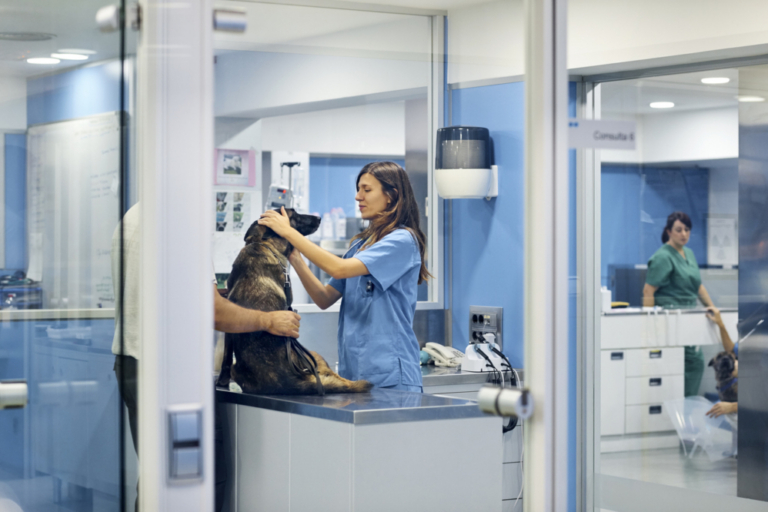
Healthcare environments are constantly in motion. Patients move throughout facilities. Staff circulate between rooms and departments. Visitors come and go. Equipment travels from patient to patient. Air moves continuously through shared spaces. Every interaction creates new opportunities for pathogen exposure.
As a result, the moment a room is cleaned, recontamination begins again, not because existing protocols have failed, but because contamination itself is continuous. This reality is prompting healthcare leaders to explore a new question:
How can organizations continue to reduce environmental pathogen exposure between cleaning events?
Increasingly, the conversation is shifting beyond the cleaning event itself and toward the periods that follow, when healthcare operations continue, people continue moving, and pathogen exposure risk is continually reintroduced into the environment.
Emerging pathogens are reinforcing an increasingly important reality: a clean environment and a continuously controlled environment are not necessarily the same thing. As healthcare organizations strengthen preparedness efforts and advance infection prevention strategies, attention is increasingly turning toward approaches that complement traditional cleaning and disinfection protocols by addressing environmental pathogen exposure between cleaning events.
Because the challenge facing healthcare is not whether environmental cleaning can work when executed perfectly. The challenge is that pathogen exposure doesn’t stop when cleaning does. And that raises another increasingly important question:
If pathogen exposure is continuous, shouldn’t pathogen control be continuous as well?
Structural Blind Spot
This is not a failure of existing protocols. Modern cleaning and disinfection systems remain essential and are among the most rigorously designed in any industry. But they are inherently episodic by design. They are intended to address contamination at specific points in time.
They occur:
- Between patients
- After procedures
- During scheduled cleaning cycles
And emerging pathogen preparedness increasingly demands strategies that address what happens after cleaning and disinfection activities have been completed, not solely the effectiveness of the cleaning and disinfection process itself.
It is within that interval, after surfaces have been cleaned and before the next intervention occurs, where environmental pathogen exposure risk can continue to persist, spread, and be reintroduced into the space.
Because even after cleaning is complete:
- Pathogens continue to enter and move through the environment via people, equipment, and airflow.
- Healthcare spaces remain in constant motion, with patients, staff, visitors, and room turnover continuously reshaping the environment.
- The process of recontamination begins the moment cleaning and disinfection activities end.
As a result, a room may appear clean while environmental pathogen exposure risk continues to evolve.
That is the Illusion of Clean.
A Continuity Problem – Not a Cleaning Problem
Healthcare’s challenge is no longer simply cleaning. It is managing pathogen exposure in environments where risk is continuously reintroduced.
Healthcare has become exceptionally sophisticated at cleaning and disinfection. Yet pathogen exposure risk remains a persistent challenge because healthcare environments are dynamic, continuously occupied, and constantly changing.
Consider the scale of the challenge:
- On any given day, approximately 1 in 31 U.S. hospital patients has at least one healthcare-associated infection (HAI).¹
- CDC estimates indicate there were approximately 687,000 HAIs in U.S. acute care hospitals in a single year, contributing to roughly 72,000 patient deaths during hospitalization.²
- HAIs continue to represent a significant burden on patients, healthcare systems, and providers, contributing to billions of dollars in excess healthcare costs annually.³
These realities help explain why healthcare leaders continue to explore strategies that address not only contamination reduction during cleaning events, but also environmental pathogen exposure risk between them.
In response, healthcare organizations are increasingly exploring continuous approaches to environmental pathogen management that work alongside existing infection prevention protocols. The objective is straightforward: reduce environmental pathogen exposure not only during cleaning and disinfection activities, but throughout the continuous operation of occupied healthcare environments.
Even a single healthcare-associated infection may result in significant financial impact through additional treatment costs, reimbursement penalties, operational disruption, and reputational risk, making environmental pathogen mitigation an increasingly important operational and economic consideration for healthcare facilities.
This growing focus on preparedness, environmental risk management, and continuous pathogen reduction is driving interest in technologies and strategies designed to complement traditional cleaning and disinfection protocols by addressing pathogen exposure between intervention events.
Continuous pathogen control works alongside the essential expertise of EVS and Infection Prevention teams by supporting what episodic interventions cannot fully address: the exposure that naturally occurs during normal operations.
Where Synexis® Helped Fill a Critical Gap in Infection Control Strategy
Synexis developed a continuous pathogen reduction technology designed to support healthier occupied environments between cleaning events.
A growing body of peer-reviewed research has evaluated the performance of Synexis DHP® technology in occupied healthcare environments, demonstrating measurable reductions in environmental microbial burden and supporting its role as part of a broader, layered approach to infection prevention and preparedness.
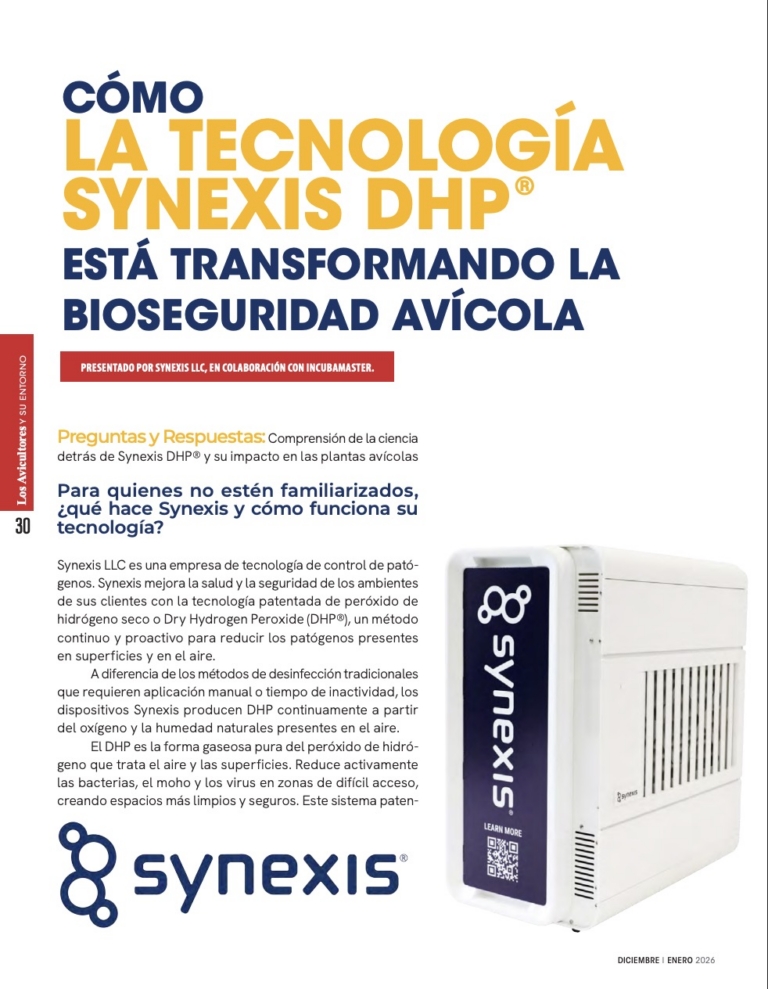
DHP® technology is not a generic concept. It is a patented pathogen control technology invented and owned by Synexis where its devices convert ambient oxygen and humidity into the pure gas form of hydrogen peroxide, creating continuous, proactive microbial-reduction pressure throughout the environment, treating the air, surfaces and hard-to-reach areas. Not intermittently. Continuously.
And it’s important to clarify: Synexis DHP® is a proprietary technology developed by Synexis. While others may attempt to reference, imitate, or leverage Synexis-derived case narratives, they do not replicate:
- A foundation of peer-reviewed research and scientific validation.
- A proprietary delivery system intentionally engineered for continuous use in occupied spaces.
- More than a decade of experience helping organizations address environmental pathogen exposure in real-world operating environments.
DHP® technology is not one of many approaches. It is the original patented technology developed by Synexis and supported by years of peer-reviewed research and real-world implementation.
What This Means in Practice
Continuous pathogen control approaches are designed to help address environmental pathogen exposure between cleaning and disinfection events by continuously reducing airborne and surface-level pathogens within occupied spaces.
Synexis DHP® technology operates continuously to help reduce:
- Viral pathogens
- Bacteria and Spores
- Mold and Fungi
- Odors and volatile organic compounds (VOCs)
Without:
- Additional labor requirements
- Workflow disruption
- Changes to existing cleaning and disinfection protocols
- Dependence on individual compliance or intervention
The Shift Healthcare Is Beginning to Make
Healthcare has invested decades in improving cleaning and disinfection practices and those efforts remain essential. But a growing number of healthcare leaders are beginning to recognize that environmental pathogen exposure is continuous, even when cleaning interventions are not.
As a result, the conversation is beginning to shift.
From:
- Periodic intervention → Continuous indoor environmental management
- Cleaning events → Exposure management
- Reactive response → Preparedness and risk reduction
- Point-in-time contamination reduction → Continuous pathogen control
The opportunity is not to replace existing infection prevention protocols. The opportunity is to strengthen them.
The Preparedness Imperative
Emerging pathogens and multidrug-resistant organisms are reinforcing an increasingly important reality: environmental pathogen exposure is continuous, persistent, and often difficult to predict.
Healthcare organizations are increasingly recognizing that preparedness for emerging and reemerging pathogens requires environmental strategies that remain active throughout daily operations. Continuous pathogen control enhances readiness by reducing the environmental burden that can contribute to transmission risk.
Continuous approaches support EVS and Infection Prevention teams by addressing the exposure that naturally occurs during normal operations. This is no longer an optional enhancement. It represents the next evolution of a resilient and modern infection prevention framework.
As healthcare organizations strengthen their infection prevention and preparedness strategies, it is increasingly essential to evaluate continuous pathogen control as a core component of environmental management.
Not because healthcare has a cleaning problem. But because pathogen exposure is continuous.
For organizations seeking to strengthen preparedness and reduce environmental pathogen burden between routine cleaning events, the question is no longer whether continuous exposure exists.
The question is how best to address it.
Synexis recognized that reality more than a decade ago and built its patented DHP® technology around a simple premise: if exposure is ongoing, pathogen control strategies should be designed to operate continuously as well.
Today, Synexis technology is supported by peer-reviewed research, engineered for use in occupied spaces, and validated through real-world deployments in healthcare environments, helping organizations strengthen preparedness while supporting broader infection prevention and environmental management strategies.
About Synexis
Since 2008, Synexis has been an industry leader delivering continuous pathogen control technology that is intentionally designed for occupied environments. Synexis makes customer environments healthier and safer with DHP® patented technology, a continuous, proactive method for reducing surface-level and airborne pathogens.
Synexis patented devices have undergone rigorous testing by Underwriters Laboratories (UL) and are certified to meet UL2998 for zero ozone emissions and can run 24/7 within occupied spaces. Synexis systems are regulated by the US Environmental Protection Agency and state governments. Synexis devices are produced in EPA-registered facilities and packaged and labeled in accordance with EPA regulations, appearing at 40 CFR 152.500. Peer-reviewed research and other resources can be found at www.synexis.com/resources
Synexis and Diversey have partnered to help healthcare customers more easily procure, deploy, and scale Synexis DHP® pathogen control technology across healthcare environments.
*Statistics and estimates referenced are derived from publicly available data published by the U.S. Centers for Disease Control and Prevention (CDC) and related healthcare epidemiology research. Specific Citations:
¹ CDC — HAI Prevalence Survey
“On any given day, about 1 in 31 hospital patients has at least one healthcare-associated infection.”
² CDC — HAI Hospital Prevalence Survey
CDC estimates approximately 687,000 HAIs in U.S. acute care hospitals annually, with approximately 72,000 patients with HAIs dying during hospitalization.
³ CDC Economic Burden Analysis
Direct medical costs associated with HAIs have been estimated at approximately $28–45 billion annually.